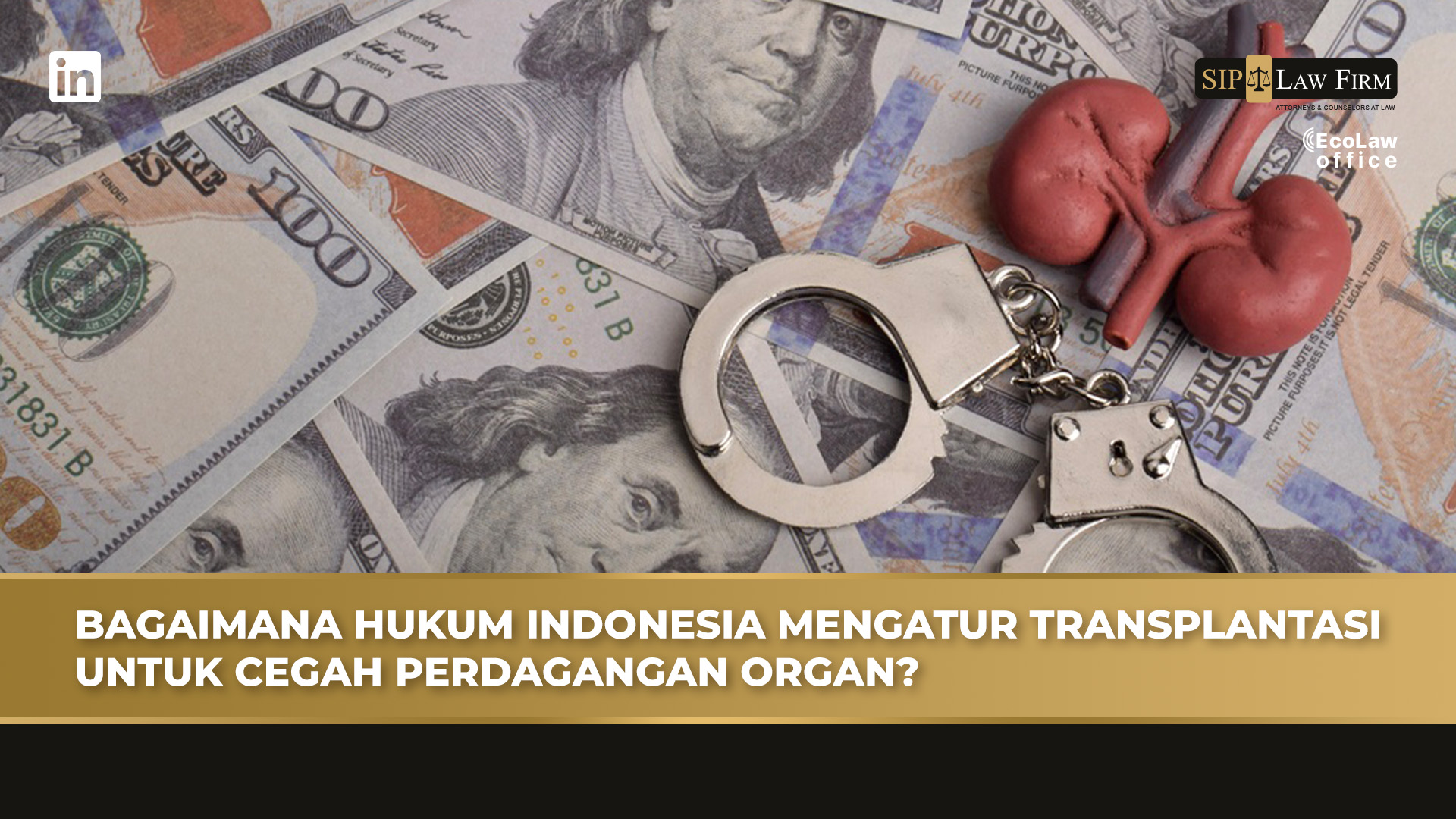
In recent years, the issues of organ trafficking and the limited availability of donors have once again drawn public attention in Indonesia. National media reports have highlighted alleged cross-border organ trade involving Indonesian citizens, exposing regulatory gaps as well as the economic pressures that drive individuals into illegal donation practices. This phenomenon not only undermines fundamental humanitarian values but also underscores a critical imbalance: the growing demand for organ transplantation has not yet been matched by a fully effective and transparent system.
At the same time, advancements in medical technology and biotechnology have significantly improved the success rates of organ transplantation as a life-saving solution. Demand for kidney, liver, and heart transplants continues to rise, in line with the increasing prevalence of chronic diseases. However, without a robust legal framework and consistent enforcement, these advancements remain vulnerable to misuse. In this context, the law plays a crucial role, not merely as a regulatory instrument, but as a safeguard balancing medical innovation, ethical considerations, and the protection of human rights.
Understanding the Legal Framework of Organ Transplantation in Indonesia
Indonesia’s legal framework for organ transplantation is primarily governed by Law No. 17 of 2023 on Health (“Health Law”), which serves as the foundational regulation for the transplantation of human organs, tissues, and cells.
Article 124 paragraph (1) of the Health Law stipulates that organ and/or tissue transplantation shall be conducted solely for the purposes of medical treatment and health recovery, and must be grounded in humanitarian principles. Furthermore, Article 124 paragraph (3) explicitly prohibits the commercialization or trade of human organs under any circumstances.
This prohibition establishes a clear legal boundary: any form of transaction involving human organs is strictly unlawful.
In practice, Indonesian regulations distinguish between two types of organ donation, living donors and deceased donors, as further regulated under Government Regulation No. 28 of 2024 (“GR 28 of 2024”). This regulatory framework provides clear limitations on permissible sources of organs, ensuring that all procedures adhere to ethical, medical, and legal standards.
For living donors, organ retrieval is only permissible where valid consent has been obtained. Such consent must be given voluntarily, without coercion, and only after comprehensive medical examinations confirming the safety of both donor and recipient. These requirements aim to protect donors from exploitation and disproportionate health risks.
For deceased donors, organ procurement may only proceed if prior consent has been given during the donor’s lifetime, or alternatively, with the approval of the closest family members after death has been declared in accordance with established medical standards. This process must also meet strict clinical criteria to prevent potential abuse.
Through these provisions, Indonesian law seeks to strike a balance between urgent medical needs and the protection of human dignity for both donors and recipients.
Procedures and Legal Requirements for Organ Transplantation
In practice, organ transplantation in Indonesia is subject to stringent procedural and regulatory requirements, encompassing both medical and administrative aspects. Key stages include:
- Donor and Recipient Consent
All transplantation procedures must be based on informed consent. Living donors are required to provide explicit, voluntary consent free from any form of pressure. This consent must be documented in writing and witnessed by authorized parties.
For deceased donors, organ retrieval is only permissible with prior consent or approval from the closest family members. In addition, it should be noted that GR 28 of 2024, through Article 337(1)(a), stipulates that prospective donors must be at least 18 (eighteen) years of age.
- Medical Eligibility Assessment
Both donor and recipient must undergo rigorous medical screening, including compatibility of blood type and tissue, overall health condition of the donor, and evaluation of potential medical risks. This process ensures both the success of the transplant and the minimization of complications.
- Prohibition of Compensation
Indonesian law strictly prohibits donors from receiving any form of compensation. This aligns with the principle that the human body is not a commodity. Donors must formally declare that no sale or financial agreement exists between themselves and the recipient.
- Authorized Healthcare Facilities
Transplantation procedures may only be conducted in hospitals that hold specific government authorization and are supported by qualified medical professionals.
- Government Oversight
The entire transplantation process is subject to strict government supervision, including mandatory registration and reporting mechanisms to prevent misuse.
These comprehensive procedures demonstrate that organ transplantation is not an ordinary medical act, but a highly regulated process subject to rigorous legal oversight.
Violations and Legal Sanctions
Despite the existence of a comprehensive legal framework, violations in organ transplantation remain a serious concern. The Indonesian government has therefore reinforced sanctions under the Health Law, particularly for the most severe offenses, commercialization and trafficking of human organs.
Individuals involved in the commercialization of organ transplantation may face imprisonment of up to five years and/or fines of up to IDR 500 million. Meanwhile, those engaged in the sale and purchase of human organs may face imprisonment of up to seven years and/or fines of up to IDR 2 billion.
Other violations include:
- Unauthorized Transplant Procedures: Conducting transplantation in unlicensed facilities or by unqualified personnel may result in administrative sanctions, including license revocation, as well as criminal penalties.
- Organ Retrieval Without Consent: Procuring organs without valid consent constitutes a serious criminal offense.
- Provision of Financial Incentives: Any form of financial compensation to donors, whether direct or indirect, is strictly prohibited.
- Role of Intermediaries (Organ Brokers): Individuals acting as intermediaries in organ trade may also face severe penalties. In practice, organ trafficking often involves transnational criminal networks, which Indonesia seeks to address through strict regulation and enforcement.
Notably, the World Health Organization (WHO) estimated in 2007 that approximately 5–10% of organ transplants worldwide involved organs obtained from the black market, highlighting the global scale of this issue.
Ongoing Challenges and Future Outlook
While Indonesia’s legal framework is relatively comprehensive, its implementation continues to face significant challenges.
First, the limited number of donors remains a critical issue. Public awareness regarding organ donation is still low, resulting in a gap between supply and demand.
Second, high demand creates incentives for illegal practices. In certain circumstances, patients may be tempted to pursue unauthorized channels to secure life-saving organs.
Third, emerging biotechnological innovations. such as organ printing and tissue engineering offer promising alternatives. However, these developments also require adaptive regulatory frameworks to prevent potential legal loopholes.
In this rapidly evolving landscape, the law must not lag behind technological progress. Regulatory frameworks must be forward-looking, capable of anticipating innovation while upholding ethical and humanitarian principles.***
The growing complexity of legal certainty in the healthcare and biotechnology sectors demands careful attention, particularly in high-risk practices such as organ transplantation.
Ensuring full compliance with legal requirements, regulatory standards, and risk mitigation measures is no longer optional, it is essential.
Engaging legal counsel can help healthcare institutions and businesses navigate these complexities, ensuring that every step aligns with applicable laws and global ethical standards.
Regulations:
- Law No. 17 of 2023 on Health (“Health Law”).
- Government Regulation No. 28 of 2024 on the Implementing Regulation of Law No. 17 of 2023 on Health (“GR 28 of 2024”).
Reference:
- Aturan Transplantasi Organ Menurut Negara dan Agama. HukumOnline. (Accessed on 13 April 2026, 09:45 WIB)
- Explainer: Understanding Human Trafficking for Organ Removal. United Nations (UN). (Accessed on 13 April 2026, 11:12 WIB)