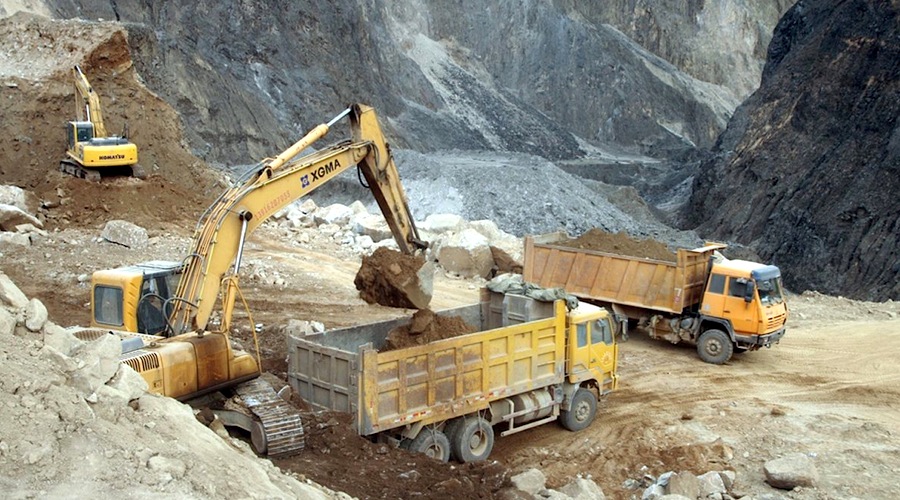
Illegal mining or mining without permits is rife in mineral and coal producing areas in Indonesia. Such illegal mining activities commonly involved local communities.
The rise of illegal mining is not without cause. It is not uncommon for perpetrators to claim that they do not know about the permit requirements or are reluctant to apply for the necessary permits,
One example can be observed in case No. 42/PID.B/2015/PN.Sgm with the defendant identified as Sujira.
During the trial, Sujira admitted that she committed illegal mining activities and claimed that she did that because almost everyone who carried out mining activities in her village did not have a permit. Previously, Sujira’s husband had visited the District Mining Service. Gowa, South Sulawesi to apply for mining permits. However, the Gowa Regency Mining Office did not issue any mining business permits to manual sand miners as he did.
Sujira was proven to have violated the provisions of Article 158 of Law No. 4/2009 on Mineral and Coal Mining. She was sentenced to prison for 2 months and fined for Rp. 600.000.
Many people living around mining areas involved in illegal mining activities as their main livelihood. One case that can be observed is Decision 305/Pid.Sus/2018/PN Kbm.
In front of the Panel of Judges who heard his case, the defendant, identified as Darsan, said that he had to do illegal andesite mining activities to fulfill his daily needs. In this case, Darsan was proven guilty to have carried out a mining business without a Mining Business Permit (IUP) and was sentenced to prison for 1 month and fined for Rp. 2 million.
The two cases above are examples of the many cases of rampant illegal mining in Indonesia. This is partly due to a lack of knowledge of mining business permits and a lack of public understanding of the requirements to do mining businesses, especially on a small scale.
Based on Law No. 4/2009 which has been amended by Law No. 3 /2020 concerning Amendments of Law No. 4/2009 on Mineral and Coal Mining, mining refers to part or all of the stages of activities in the context of mineral or coal management and exploitation which include general investigation, exploration, feasibility study, construction, mining, processing and/or refining or development and/or utilization, transportation and sales, as well as post-mining activities.
Mining business refers to activities in the context of mineral or coal exploitation which include the stages of general investigation, exploration, feasibility studies, construction, mining, processing and/or refining or development and/or utilization, transportation and sales, as well as post-mining activities.
Based on the provisions of Article 35 of Law No. 3/2020, mining activities by individuals or legal entities must secure a Business License from the Central Government through the issuance of a Business Identification Number (NIB), standard certificates, and/or permits consisting of:
- Mining Business Permit (IUP);
- Special Mining Business Permit (IUPK);
- Special Mining Business Permit as Continuation of Contract/Agreement Operations;
- People’s Mining Permit (IPR);
- Rock Mining Permit;
- Assignment permit;
- Transport and Sales Permit;
- Mining Services Business License; and
- Mining Business License for Sales.
The authority of the Central Government to provide NIB, standard certificates and the above permits can be delegated to the Regional/Provincial Governments in accordance with the provisions of Article 35 paragraph (4) of Law No. 3 /2020.
The permits that are generally granted for general public activities are IUP and IPR. The basic differences between IUP and IPR are as follows:
| IUP | IPR |
| – Given to a Business Entity, cooperative or individual company;
– Consists of two stages of activities, namely Exploration and Production Operations – Located within the Mining Business Area determined by the government; – The area of the IUP: a. Metal mineral exploration is granted a WIUP with an area of at least 5,000 hectares and a maximum of 100 thousand hectares; b. Metal mineral production operations are granted a WIUP with a maximum area of 25 thousand hectares; c. Non-metal mineral exploration is granted a WIUP with an area of at least 500 hectares and a maximum of 25 thousand hectares; d. Non-metal mineral production operations are granted a WIUP with a maximum area of 5,000 hectares; e. Rock exploration is granted a WIUP with an area of at least 5 hectares and a maximum of 5,000 hectares. f. Rock Production Operations are granted a WIUP with a maximum area of 1,000 hectares. g. Coal Exploration is granted a WIUP with an area of at least 5,000 hectares and a maximum of 50 thousand hectares. h. Coal production operations are granted a WIUP with a maximum area of 15 thousand hectares. |
– Given by the Minister to an individual who is a local resident or a cooperative whose members are local residents
– Obtained by submitting an application to the Minister, which in this case can also be submitted to the local government (delegation) – The area is given to individual companies with a maximum area of 5 hectares and cooperatives with a maximum area of 10 hectares. |
Criminal sanctions stipulated in Article 158 of Law No. 3 of 2020 is a maximum imprisonment of 5 years and a maximum fine of IDR 100 billion.
Mining that is carried out by the general public on a small scale and is not a legal entity or cooperative must have an IPR. Community members who have the ability to establish business entities and carry out mining activities on a larger scale must have an IUP.
Permits related to mining activities are needed to prevent criminal threats that can be imposed on people wanting to engage in mining activities without valid permits and are regulated in Law No. 3 of 2020.
People should obey the applicable laws and regulations if they wish to do business in the mining sector. On the other hand, the government should facilitate the issuance of these permits and provide appropriate socialization and direction to the people who expect to apply for their mining business permits.
Author / Contributor:
 |
Made Reza, S.H., M.Kn.
Associate Contact: Mail : reza@siplawfirm.id Phone : +62-21 799 7973 / +62-21 799 7975 |